

Certain winter traditions stay with us long after the holidays end. For me, Japanese Christmas cards carry that quiet magic—soft colors, delicate illustrations, and greetings that feel warmer than the paper they’re written on. Growing up in my mother’s small mochi shop in Japan, I learned that words and food share the same purpose: to comfort, to connect, and to make a moment feel meaningful.
Today, as I travel and discover new cultures, Japanese Christmas cards remain one of my favorite ways to share warmth across distances. Whether you’re sending them to family, friends, or readers who love global holiday traditions, these cards bring together elegance, simplicity, and the unique charm of Japanese winter design.
Below are the 11 best Japanese Christmas cards for this season—each with its own mood, message, and style.
11 Japanese Christmas Cards
1. Traditional Red Card with メリークリスマス
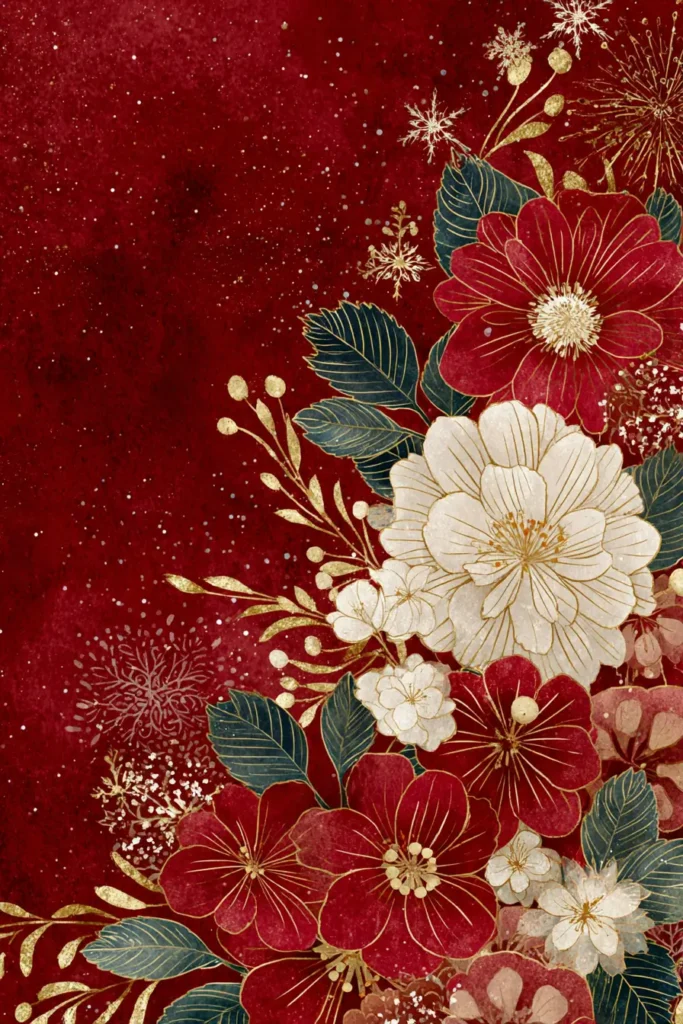
This classic card features the Japanese phrase for “Merry Christmas,” written as メリークリスマス, surrounded by winter motifs like snowflakes, holly, and hand-drawn branches.
Perfect for: anyone who loves traditional Christmas colors blended with Japanese aesthetics.
2. Minimalist Winter Scene Card

Think softly falling snow, pale mountains, watercolor trees, and a quiet path.
Minimalist cards are popular in Japan because they express winter without overwhelming detail.
Perfect for: calm, peaceful greetings.
3. Japanese Calligraphy Christmas Card
This style uses brushstroke calligraphy to write メリークリスマス or あけましておめでとうございます.
The simplicity feels modern, artistic, and deeply cultural.
Perfect for: design lovers and formal holiday greetings.
4. Wabi-Sabi-Inspired Christmas Card

Muted colors, uneven hand-drawn lines, imperfect natural textures—true wabi-sabi charm.
Perfect for: expressing gratitude and seasonal warmth with a more poetic feeling.
5. Cute Kawaii Character Holiday Card

Japan’s kawaii culture adds cheerful characters like snowmen, tiny animals, or smiling mochi shapes.
Perfect for: children, students, or friends who love light-hearted winter illustrations.
6. Nature-Inspired Botanical Christmas Card
Often featuring winter plum blossoms, red berries, pine branches, cranes, or chrysanthemums.
Japan loves seasonal symbolism, and these motifs welcome good fortune for the coming year.
Perfect for: nature lovers or anyone who appreciates Japanese seasonal art.
7. Mixed English & Japanese Greeting Card
Many Japanese cards combine English “Merry Christmas” with Japanese phrases:
– メリークリスマス
– 良いクリスマスをお過ごしください
– あけましておめでとうございます
Perfect for: international friends or bilingual households.
8. Elegant Gold-Foil Christmas Card
A favorite in Japan for end-of-year cards.
Gold foil captures soft winter light and adds a celebratory feel without being loud.
Perfect for: formal greetings, workplace messages, or holiday gifts.
9. Anime-Style Christmas Card
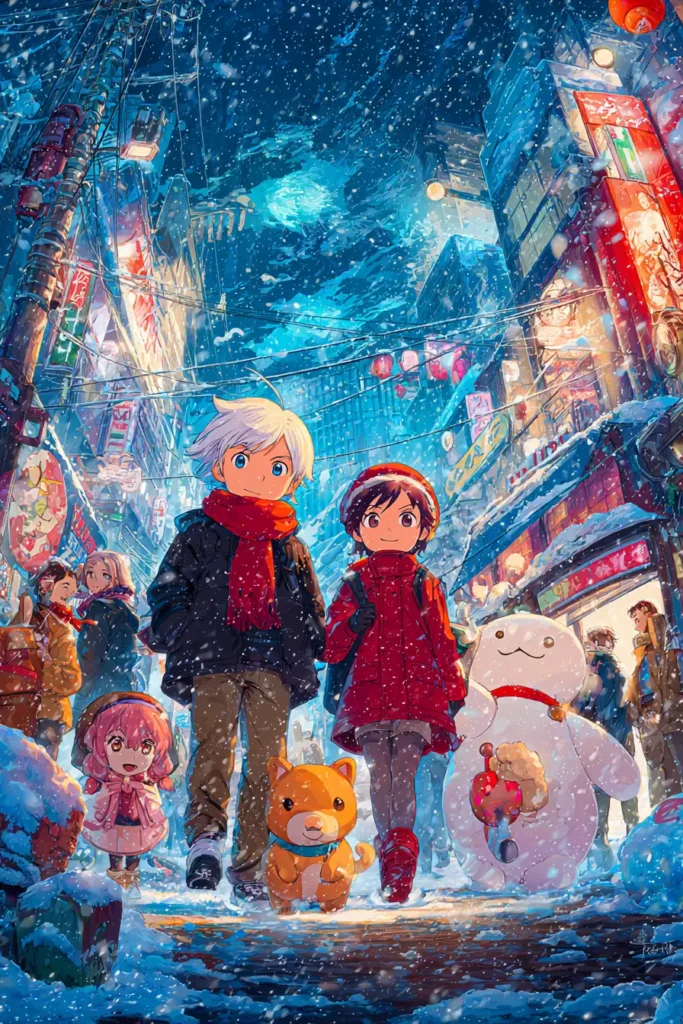
Vibrant colors, expressive characters, and playful winter themes.
This style is globally recognized and loved.
Perfect for: younger audiences or anime fans.
10. New Year Combination Card (Christmas + Akemashite Omedetō)

Because Christmas blends into the New Year season in Japan, many cards include both:
メリークリスマス
あけましておめでとうございます
This makes it easier to send one card for the full holiday period.
Perfect for: anyone receiving your card in late December.
11. Mochi-Inspired Japanese Christmas Card

Mochi holds a special place in Japanese winter traditions, appearing in both Christmas desserts and New Year celebrations. A mochi-themed Christmas card blends the softness of Japanese sweets with gentle winter imagery—round, snowy shapes, warm colors, and a sense of comfort. These cards often feature daifuku, playful mochi characters, or traditional rice cakes presented like little snowballs. They capture the nostalgic feeling of winter in Japan, especially for anyone who grew up around the scent of warm rice and the texture of freshly made mochi.
Perfect for: food lovers, Japan enthusiasts, and anyone who appreciates the warmth of handmade traditions.
How Christmas Cards Are Used in Japan
Japanese Christmas cards are a blend of holiday cheer and seasonal gentleness. They often share themes of gratitude, calm winter wishes, and appreciation for the year that has passed. While Christmas isn’t a religious holiday in Japan, the season is celebrated with food, lights, and thoughtful messages.
People exchange cards with:
- Friends
- Teachers
- Coworkers
- Couples
- Students
- Family
And because the New Year is more culturally significant, many cards naturally blend Christmas greetings with early New Year wishes.
You can also explore Old Year’s Eve Wishes from France here.
What to Write Inside a Japanese Christmas Card
Here are authentic lines you can use:
メリークリスマス。
Merry Christmas.
今年もありがとうございました。
Thank you for everything this year.
すてきなクリスマスをお過ごしください。
Have a lovely Christmas.
あけましておめでとうございます。
Happy New Year.
来年もよろしくお願いします。
I look forward to your continued kindness next year.
This structure is warm, respectful, and deeply Japanese in tone.
Short Captions for Social Media
メリークリスマス。暖かい冬を過ごしてね。
Merry Christmas. Wishing you a warm winter.
メリークリスマス。そして、あけましておめでとうございます。
Merry Christmas and Happy New Year.
FAQ About Japanese Christmas Cards
1. Do Japanese people send Christmas cards?
Yes, although New Year’s cards (nengajo) are more traditional.
2. Is Merry Christmas written in Japanese or English?
Both are common. The most typical Japanese version is メリークリスマス.
3. Why do some cards include Akemashite Omedetō?
Because Christmas is close to New Year’s, many cards include both greetings.
4. Are Japanese Christmas cards different from Western ones?
Yes. They tend to be more delicate, minimalist, and nature-inspired.
5. Can I mix English and Japanese on one card?
Absolutely. This is very popular in Japan.
Final Thoughts
Japanese Christmas cards capture the quiet warmth of the season—soft colors, thoughtful phrases, and a feeling of peaceful celebration. They remind me of the winter days in my mother’s mochi shop, where traditions were simple but full of meaning.
Whether you choose something modern, traditional, or artistic, these cards carry a small piece of Japanese winter wherever they are sent.
Find more global greetings on my Pinterest board.